This morning we moved from Eustatia Island to Great Camanoe island to snorkel at Diamond Reef.
The sea was a bit choppy, so Joran put up the sail to help stabilize us a bit. We took some video so you can see the large sail up in front. That’s the only sail he put up. Unfortunately, whenever he put up the sail, it was WAY too rocky for us to get up and move to get a picture of the entire very tall sail. This actually wasn’t the worst we went through, but it’s the only one with a video.
There is a legend about the reason this was named Diamond Reef. The story says that a woman lost her diamond engagement ring here. Or, some stories say she threw the ring after an argument with her fiancé. So, you can swim around looking for this huge diamond ring in the reef. 😊
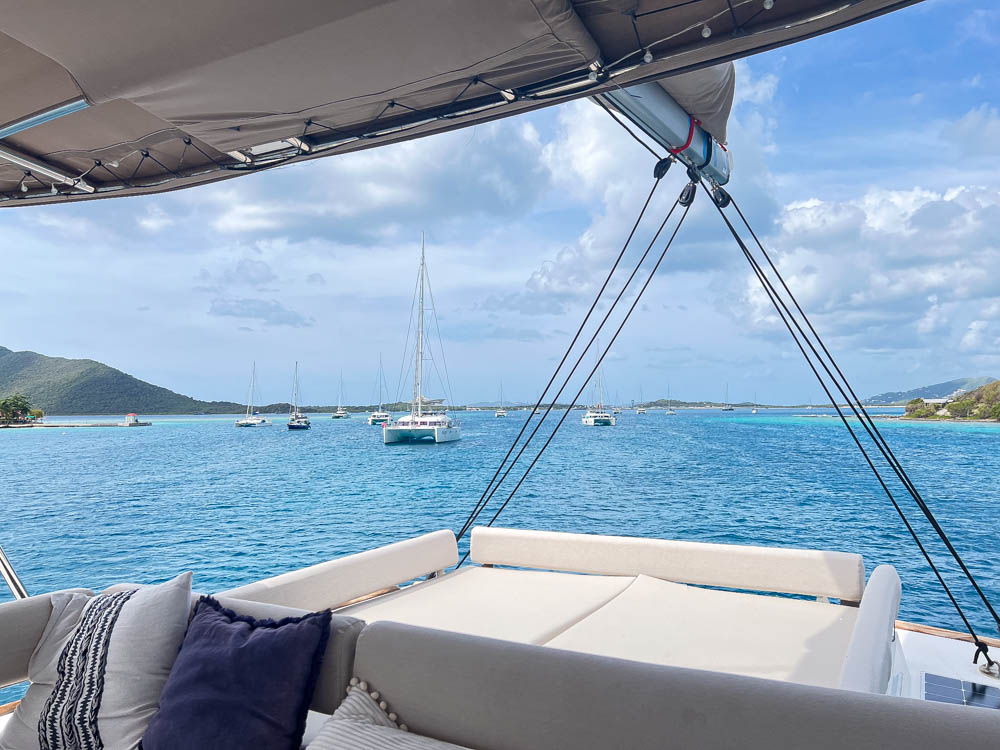
Here is a view out that back from up in the cockpit. There are a number of other boats moored, but Joran anchored us in a great spot right next to the reef.
This reef was a great snorkel for the Virgin Islands – almost as good as The Coral Gardens. Lots of (mostly dead) hard coral and living soft corals made the seascape beautiful. There were also plenty of fish in the reef. Sometimes, dead coral formations still have what the fish need to live.
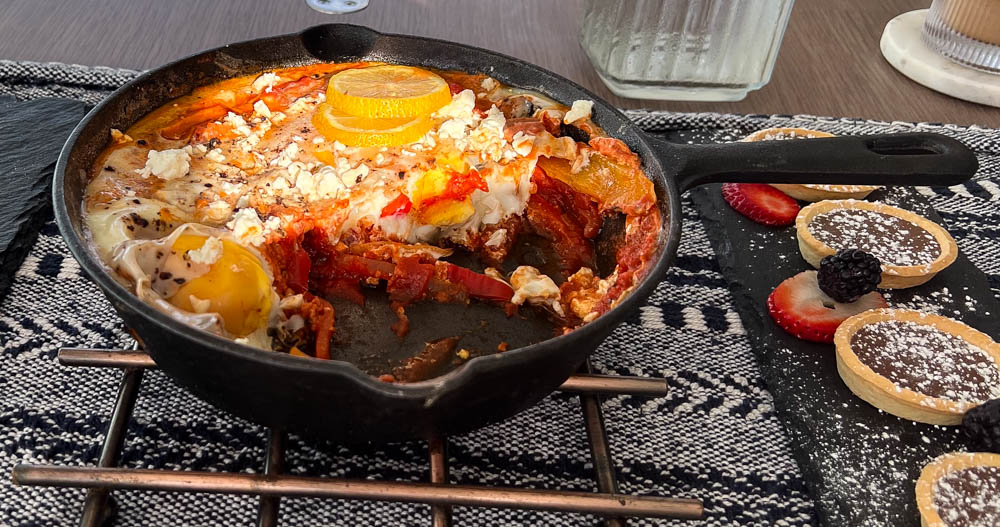
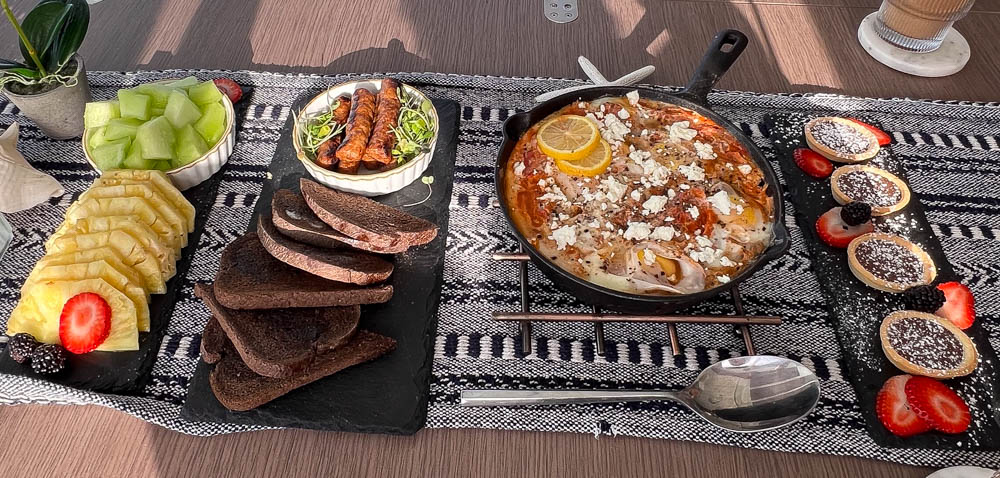
Of course, we had to start off with a yummy breakfast! Casey made a really good and interesting egg dish. It’s baked in an iron skillet – you can see the eggs, tomato and red peppers (among other things in included in the dish). In addition to the daily fruit, there were chocolate tarts!
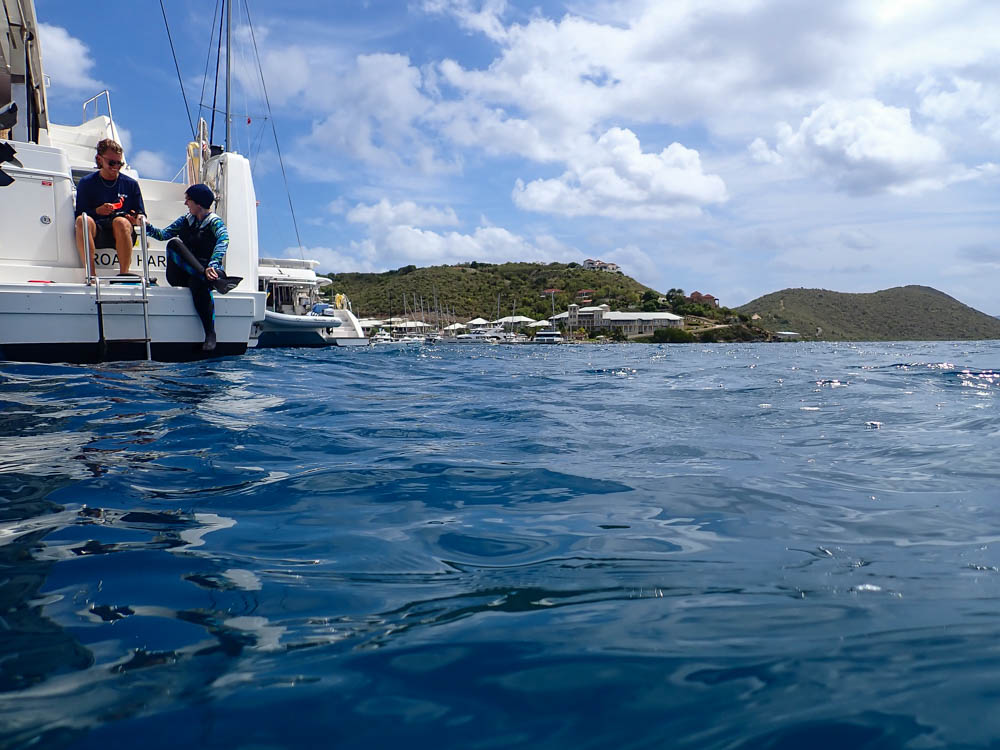
Here is Cynthia (with Joran) about to get in the water.
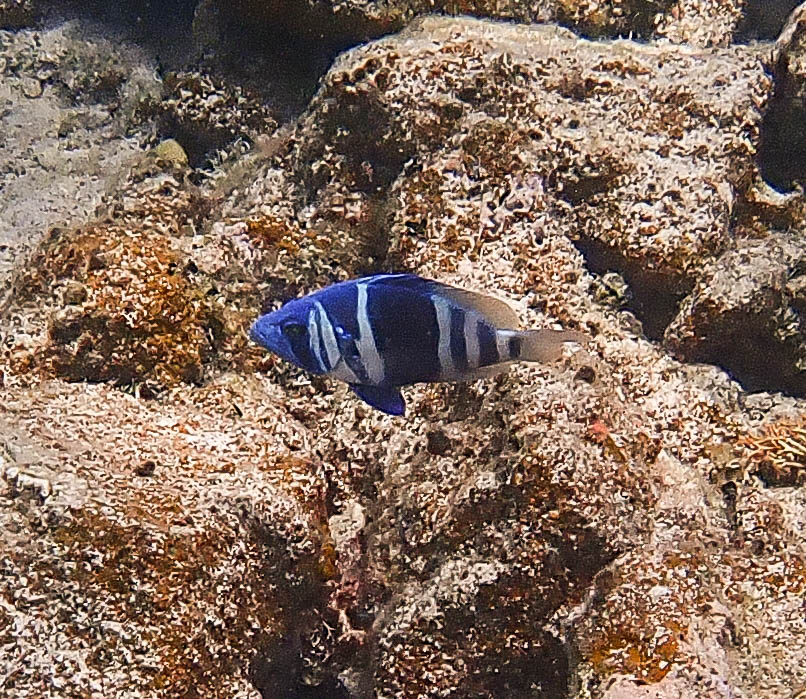
Here is a really interesting fish we have only ever seen here at this exact spot. Trying to identify it is difficult! It looks like an Indigo Hamlet fish. However, much of the information says this fish is not found in the Virgin Islands. But, some fish databases show it is now found down through all of the Caribbean. After a lot of research, I can’t find another fish that looks like this, so I think it truly is an Indigo Hamlet. 😉
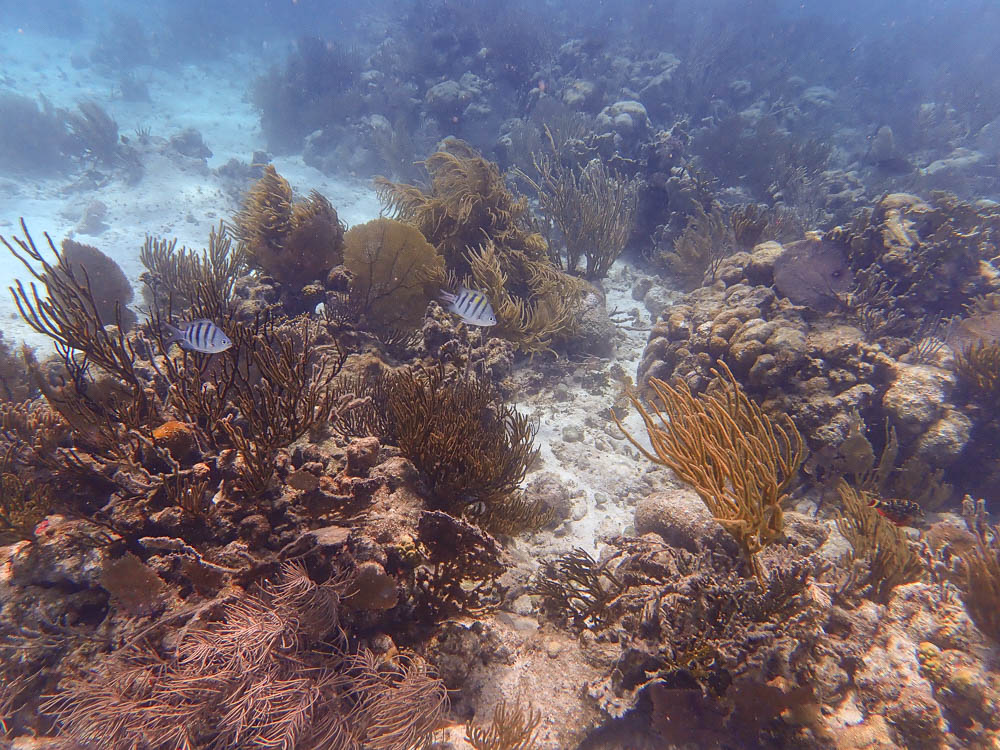
Here is a view of the seascape. You can see all the soft coral growths that give it life. They flow back and forth with the current, so it looks like a forest in the wind.
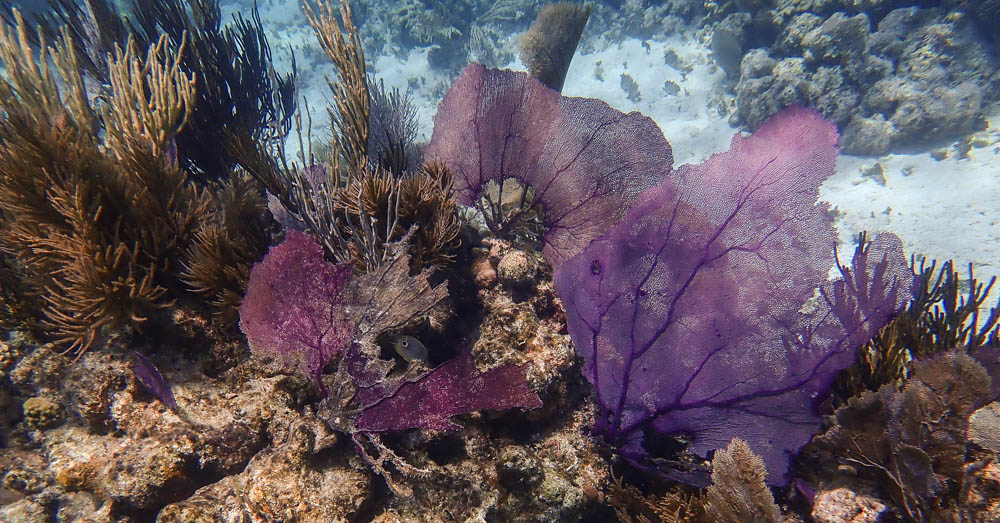
This picture captured a set of purple sea fans. They add SO much color when there is no live hard coral. It’s amazing to see these with all that purple – many times, algae or sediment will cover the sea fans so they look bleah.
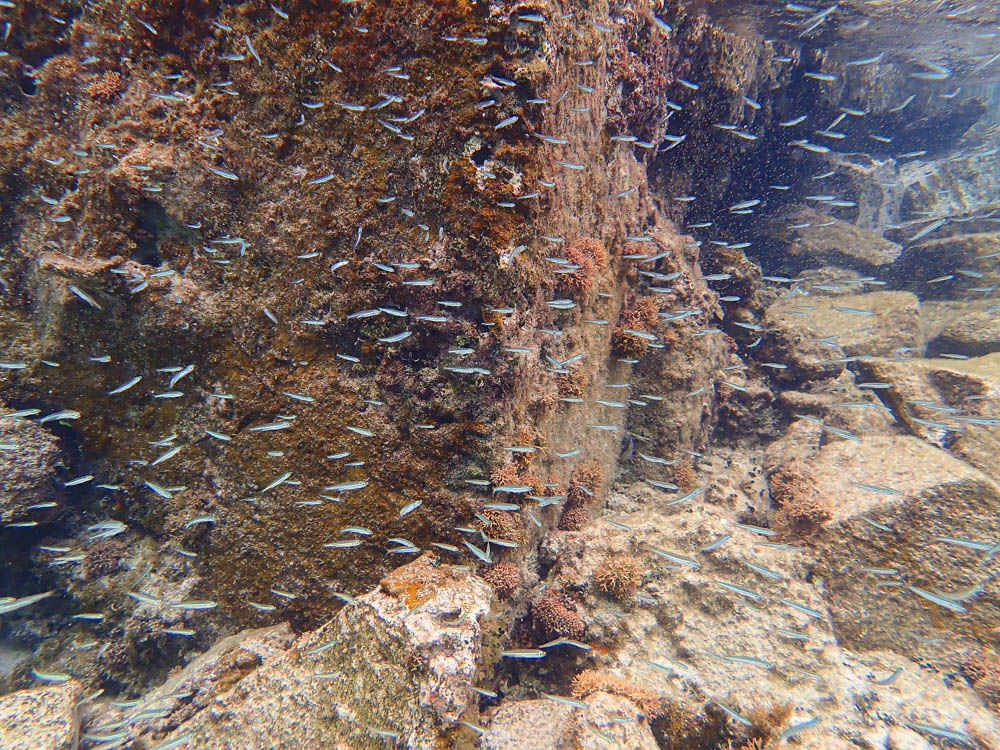
We see these little fishies in schools all over the place. Usually, it’s hard to get a good picture of them because they just hanging out in the blue water with no background. But this pic came out great! With the lighting, you can really see them against the rocks. I believe these are Silversides. We see them everywhere!
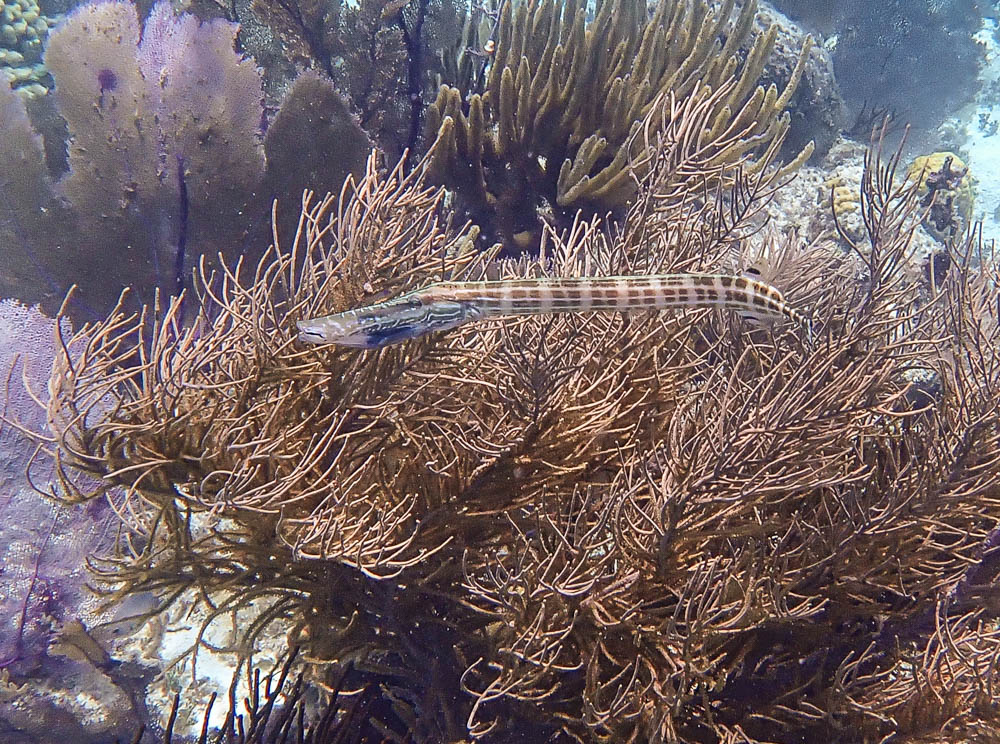
We see a few of these Trunkfish in most places we snorkel. Usually, they are floating vertically, aligned with the growth. This one was horizontal and just floated there for quite a while. He wasn’t afraid of people.
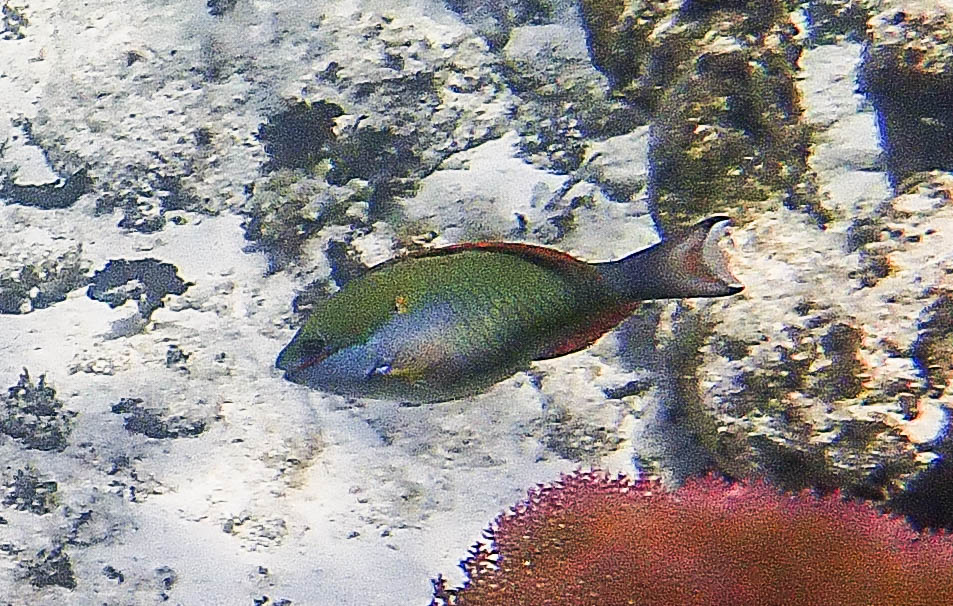
Finally! A new type of Parrotfish! This is a Redband Parrotfish. We haven’t seen this Parrotfish before. I wish we had better pictures – but they are better than nothing. These are two different fish – with such different colors! They change a lot over their lifespan, and of course, male and female look different.
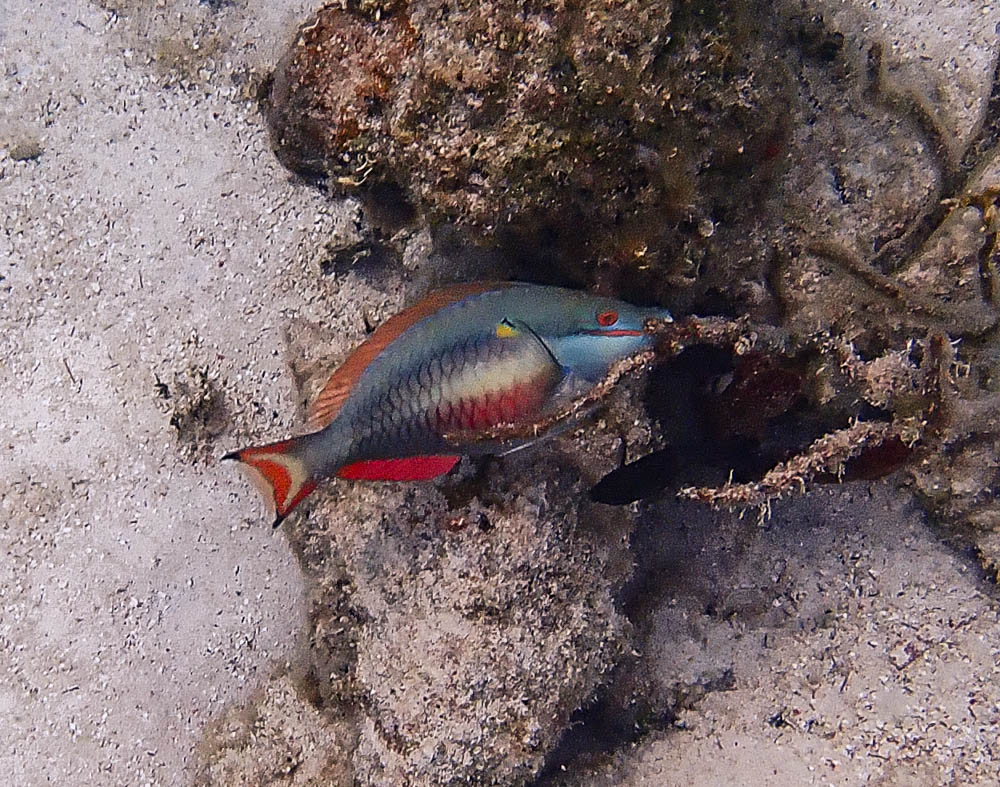
And, we found another type of Parrotfish here! This is a juvenile Yellowtail Parrotfish. I’m sure we’ve seen a lot of different Parrotfish everywhere, but they can look SO different as they age so it’s hard to know when you see a new one.
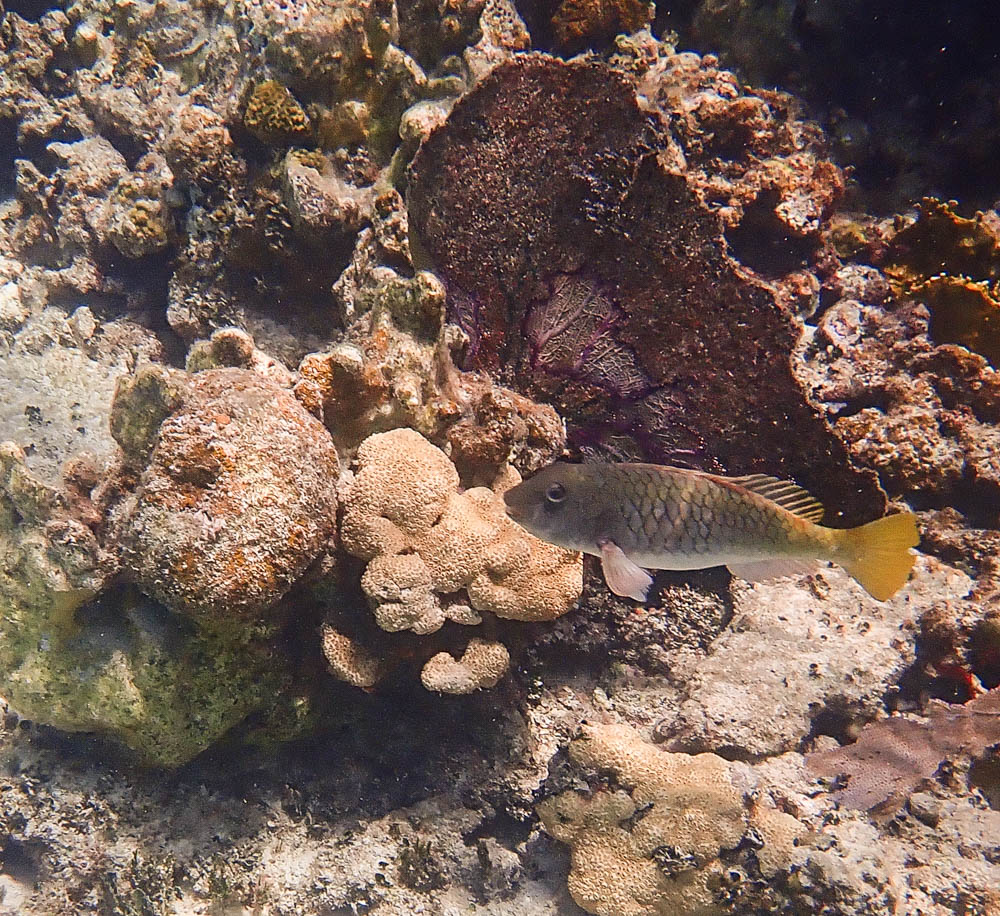
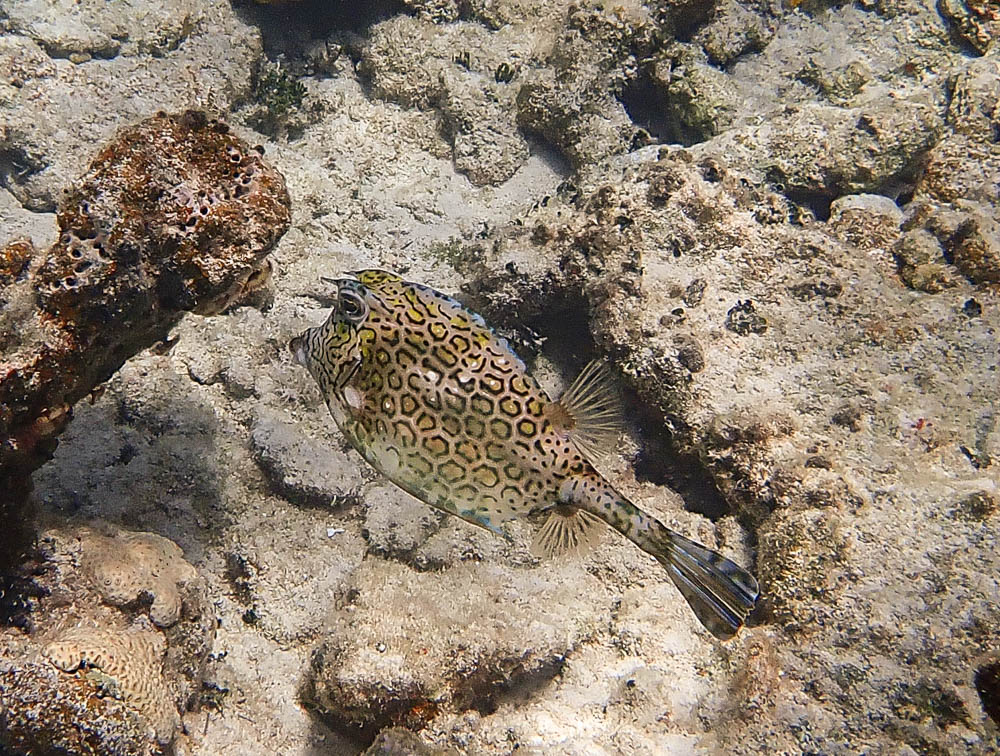
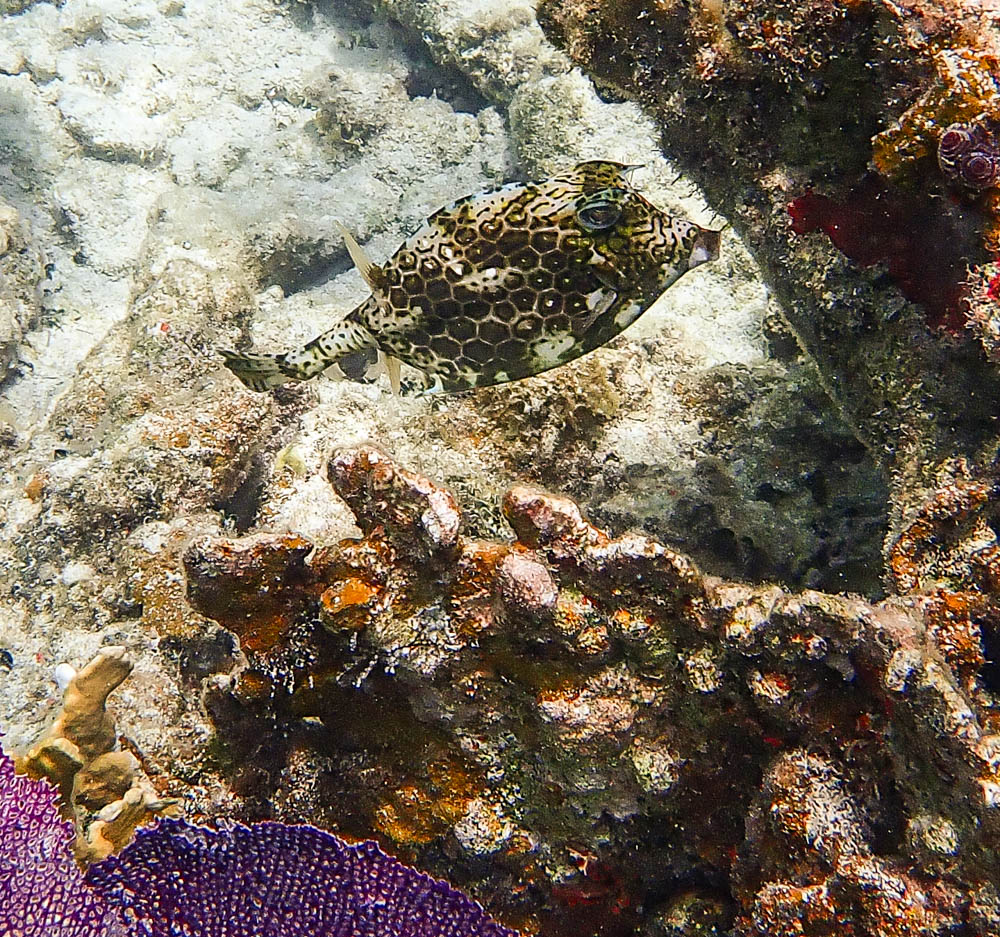
This was interesting… I was following this Honeycomb Cowfish and it changed its coloration. It started out lighter, then turned darker. I must have made it nervous, so it tried to hide. Since I was worried about stressing it, I left it alone after it changed color.
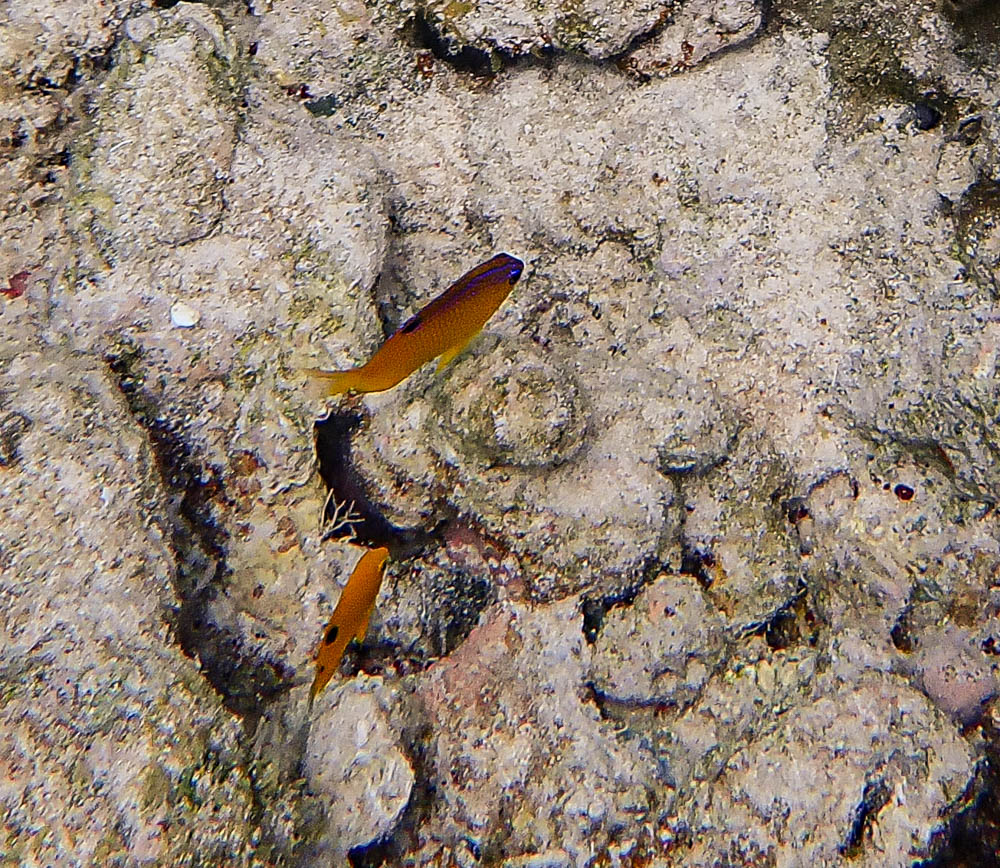
OK, this isn’t the best picture, but it had two different fish in it, so I wanted to keep it. The purple/yellow fish is a Longfin Damsel fish. The yellow with the black spot is a Threespot Damsel fish. We’ve seen the Longfin Damsel lots of places. It usually stays in the nooks and crannies, and it’s tiny, so it’s hard to get a picture of it. Wow, that Threespot is even smaller, so it was very tiny!
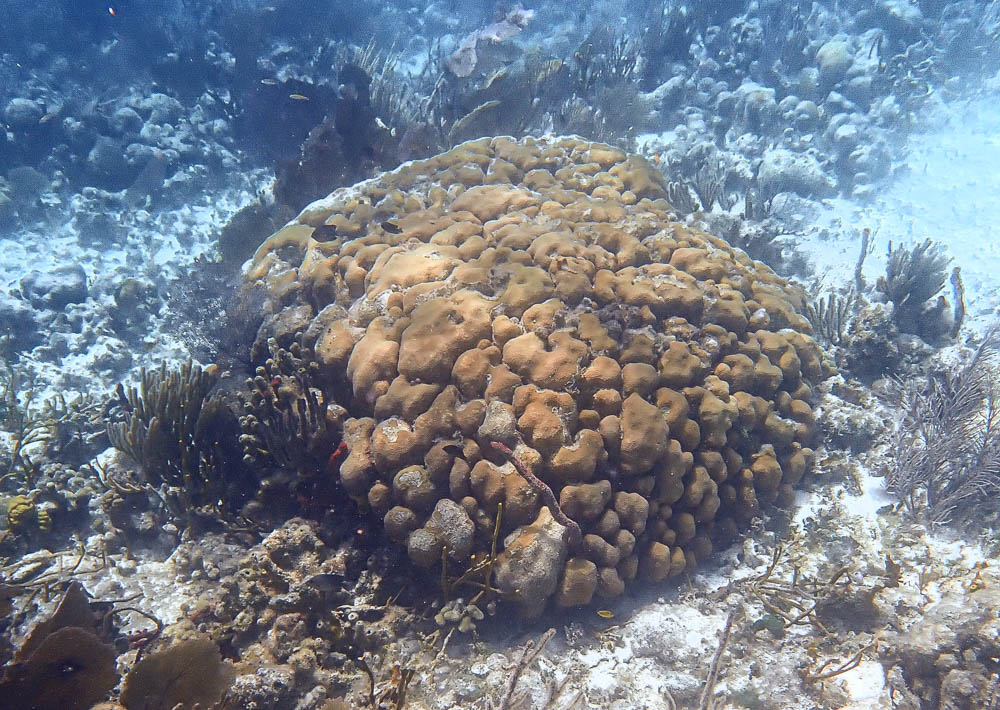
Time for another coral picture – this is a HUGE Lobed Star Coral. It was about as big as I am tall. Finally, a hard coral that’s still alive!
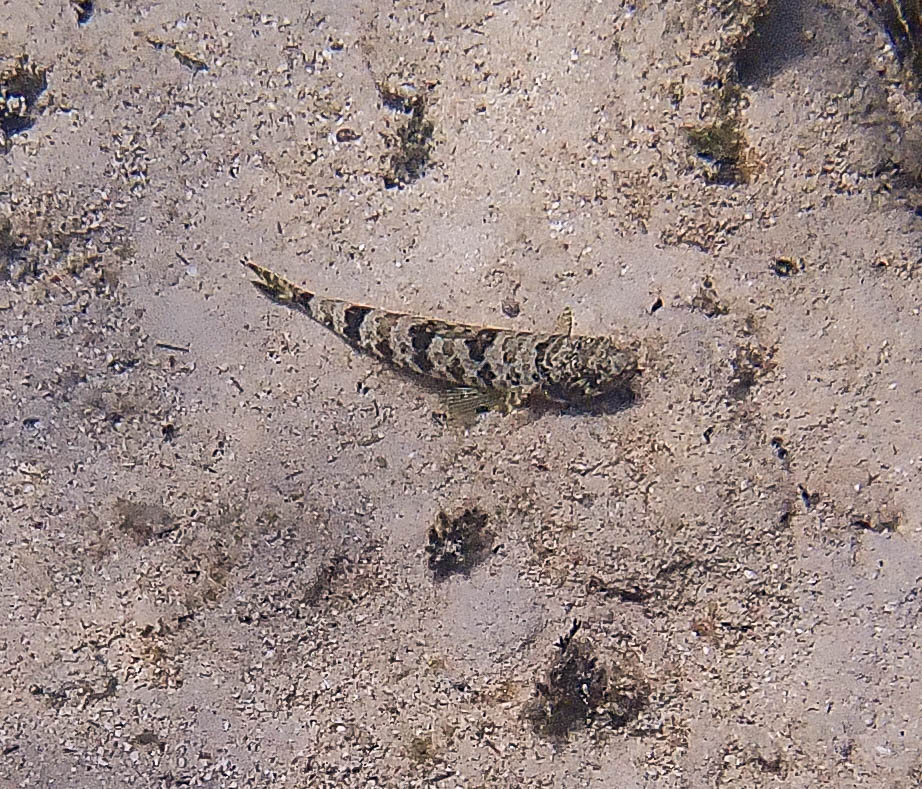
We see these fish every so often… This one is a Sand Diver Lizardfish (aka Caribbean Lizardfish). They hang out at the bottom on the sand and grab prey as it swims by. They can also cover themselves with sand to hide better.
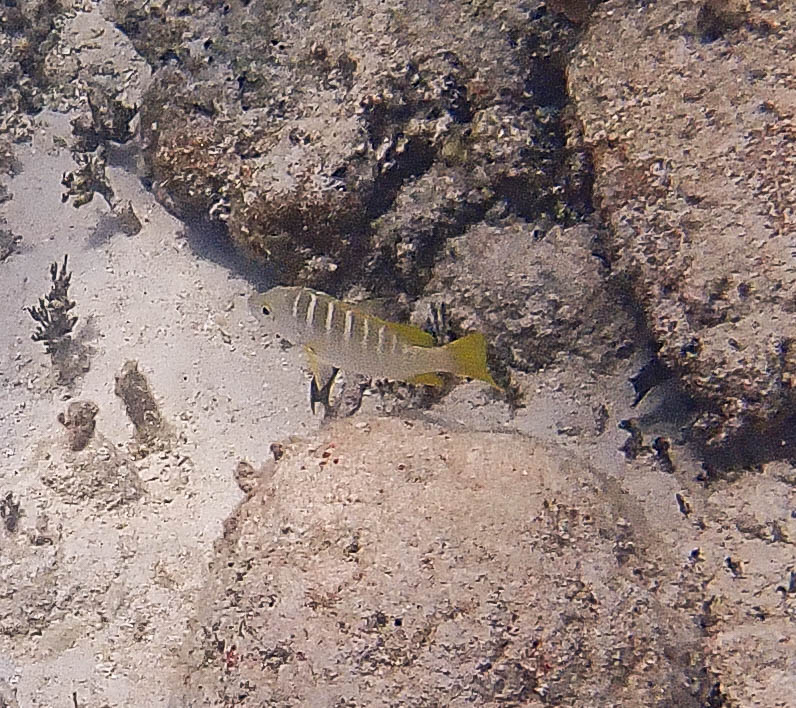
Here’s another new fish we saw at this reef. A juvenile Schoolmaster Snapper (aka Dogtooth Snapper). It was hanging out down at the bottom, so hard to get a better picture.
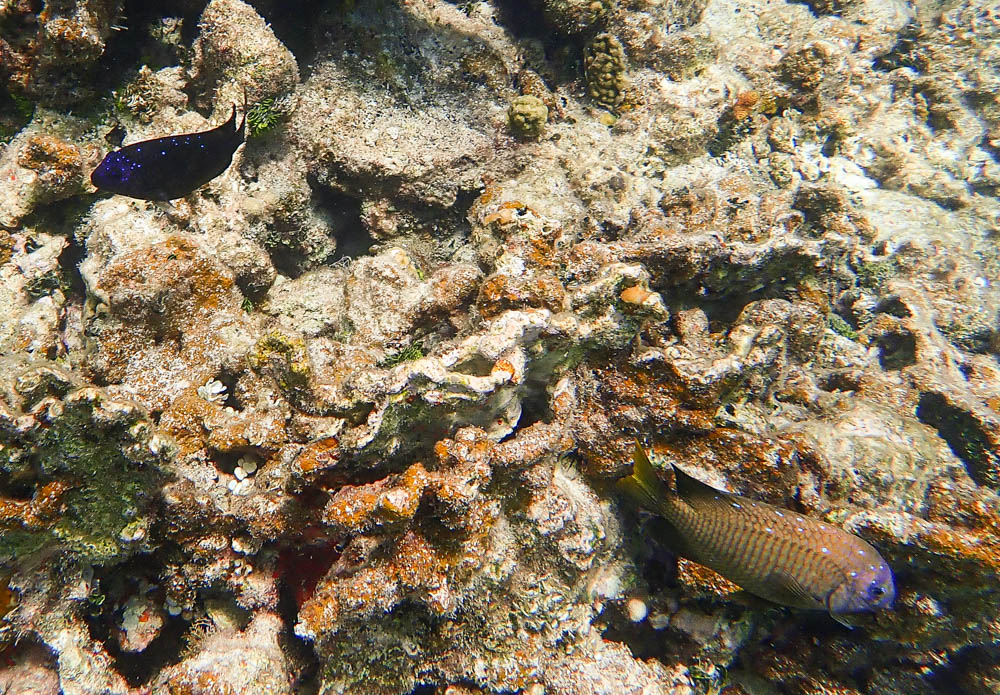
We see a lot of these blue spotted Yellowtail Damselfish. They start out tiny and all black with neon blue spots (as you’ve seen in our previous blog posts). This was a neat picture cuz it shows the fish at different ages. The younger one is at the top. You can see how it loses its black coloring as it ages.
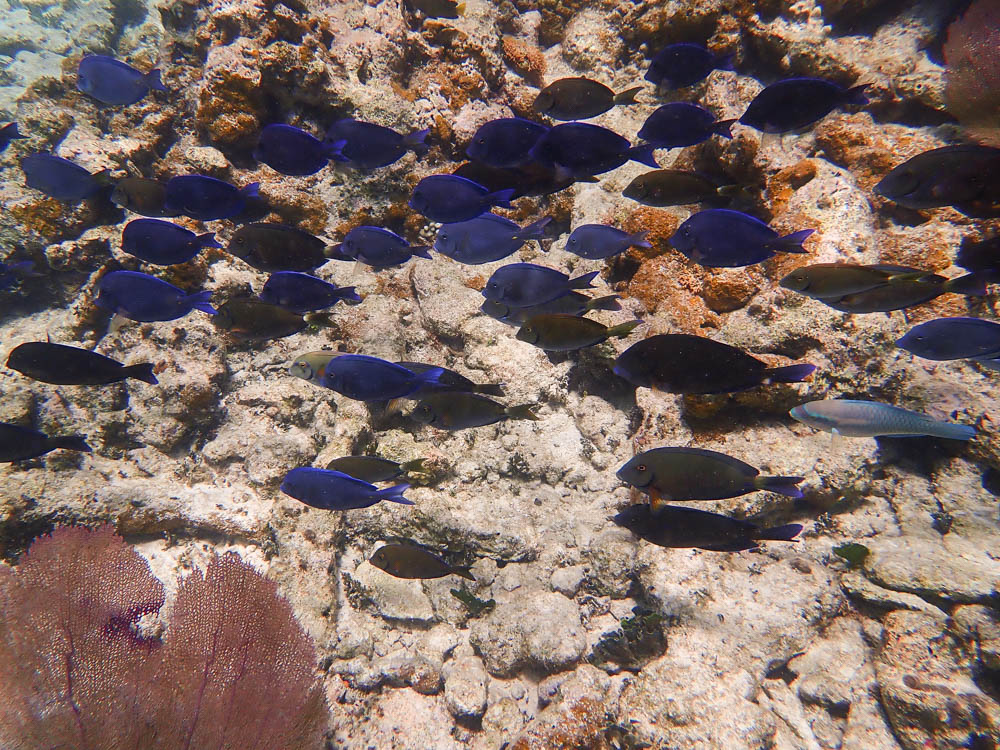
We also see schools of these Tangs in many places. But this was a good picture of them. Usually, the school is swimming past at a good speed. Nice that we can see their colors in this picture.
Alrighty! It’s time to go back to the boat. Our boat, Koru, is second from the left. Look at the color of this Caribbean water!

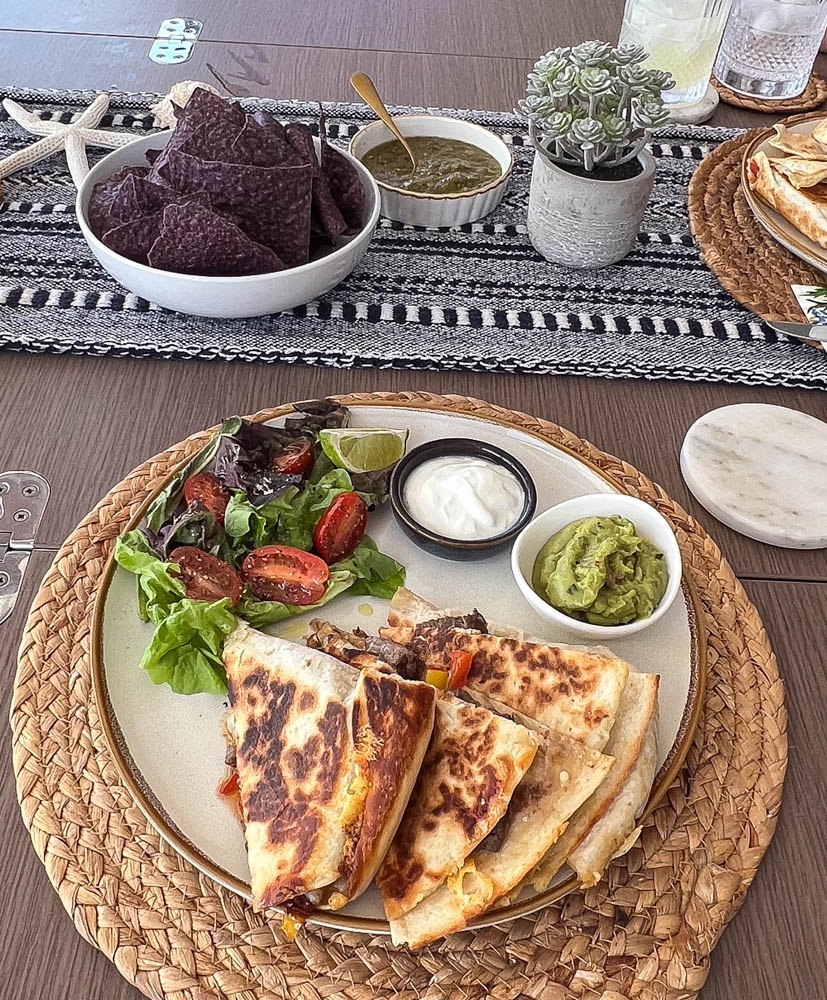
For lunch, Casey made steak quesadillas.
After lunch, we moved on to moor at Little Jost Van Dyke island. We stayed here overnight and then snorkeled in the morning.